Case study / Alchemy Pet
Alchemy Pet: a clearer store, with online net sales up 99%
Across equal 75-day windows before and after the rebuild, Alchemy Pet’s Online Store net sales increased 99%, and orders recorded as paid increased 67%. The work brought the product range, shopping controls, and groomer referrals into a more consistent customer experience.
- 99% higher Online Store net sales
- 67% more paid-status orders
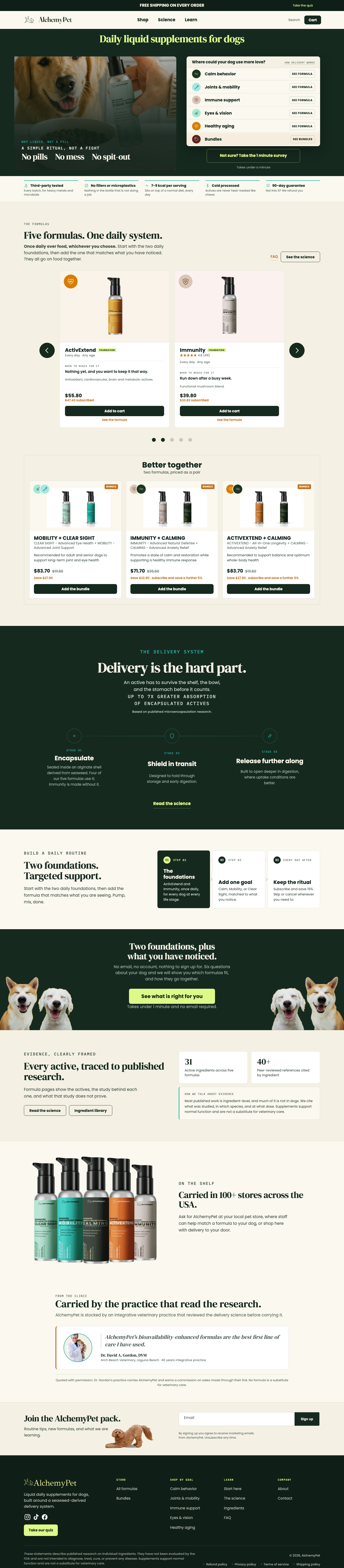
- 55% shorter mobile homepage capture
June 20-September 2 vs September 5-November 18, 2026. Equal 75-day windows. Observed after release; the rebuild’s causal contribution is not isolated.
The products were there. The shopping path needed work.
In the August collection capture, Alchemy Pet’s bottles stood out before their names did. Product names measured just 1.21:1 contrast against the card background. On the sampled Calming product page, the Add to Cart label rendered in the same color as its background. The store was already recording purchases, but key information and controls were difficult to read.
According to the project context, the site had grown through page-by-page AI-assisted editing without shared design context. Layouts, heading styles, shopping controls and page endings had drifted. Several pages already shared a header, but Science bypassed it; four of the five sampled routes lacked a semantic footer in the archived audit. The work connected those pages through a common site frame and reusable components.
Build a consistent path from browsing to buying
The rebuilt store organized the range around dogs’ needs and the role of each formula in a routine. Shared product cards presented names, prices, availability, and purchase actions consistently. The homepage, collection, and ActivExtend product page joined Science and Ingredients in a shared navigation and page structure. A replacement routine builder offered a guided route through the range; it was a different flow from the old quiz.
The theme published on September 3, 2026, with related Admin work the following morning. At a 390-pixel viewport, the homepage went from 23,512 pixels tall before the rebuild to 10,610 by October 25—about 55% shorter. The shared footer provided 23 links into shopping, goals, learning, and company information. ActivExtend’s six top-level headings became two at launch and one by October.
These are visual and structural improvements. Full checkout validation is outside these visual comparisons.
Scroll each capture to inspect the full page, or open the complete image using the link below it.
Before - August 2026
/
After - October 25, 2026
/
Scroll each capture to inspect the full page, or open the complete image using the link below it.
Before - August 2026
/collections/products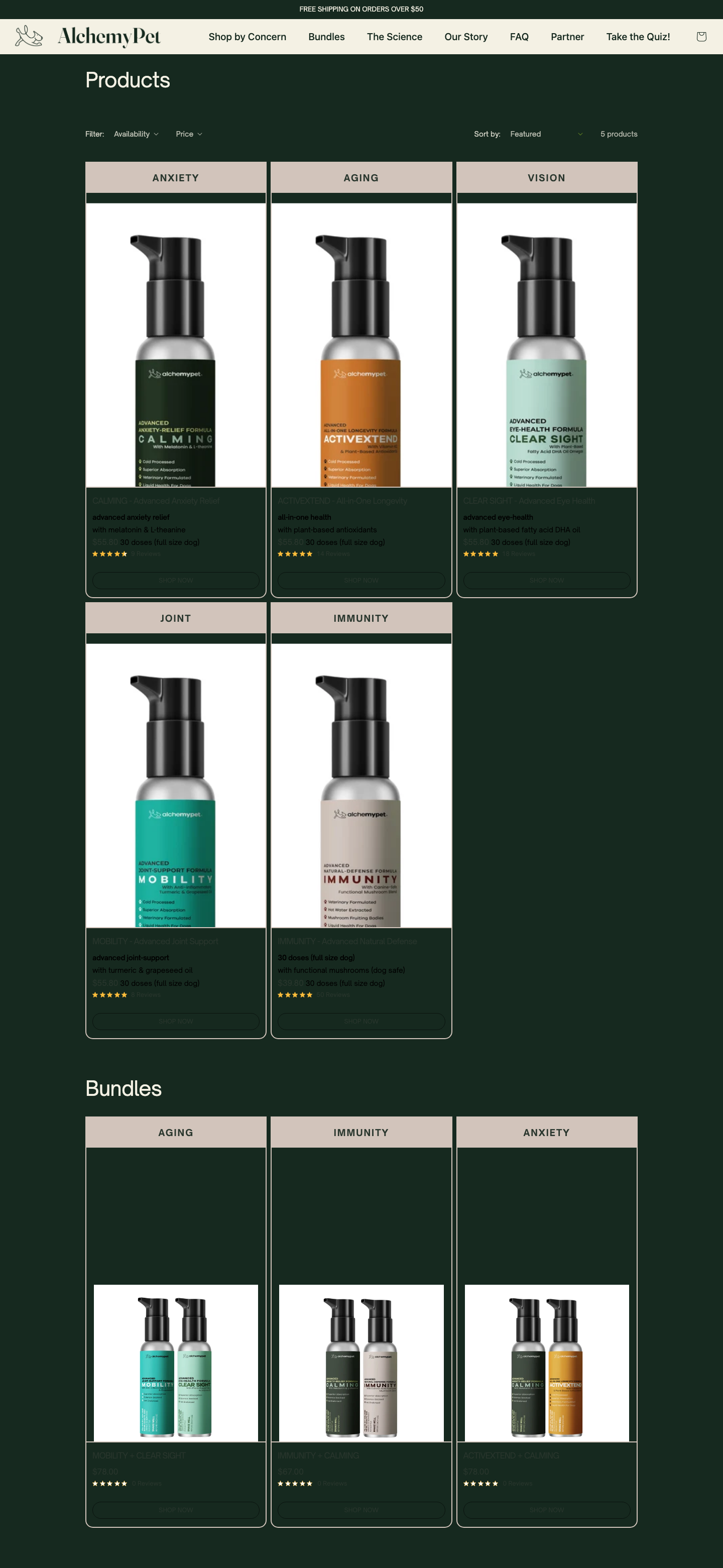
After - October 25, 2026
/collections/products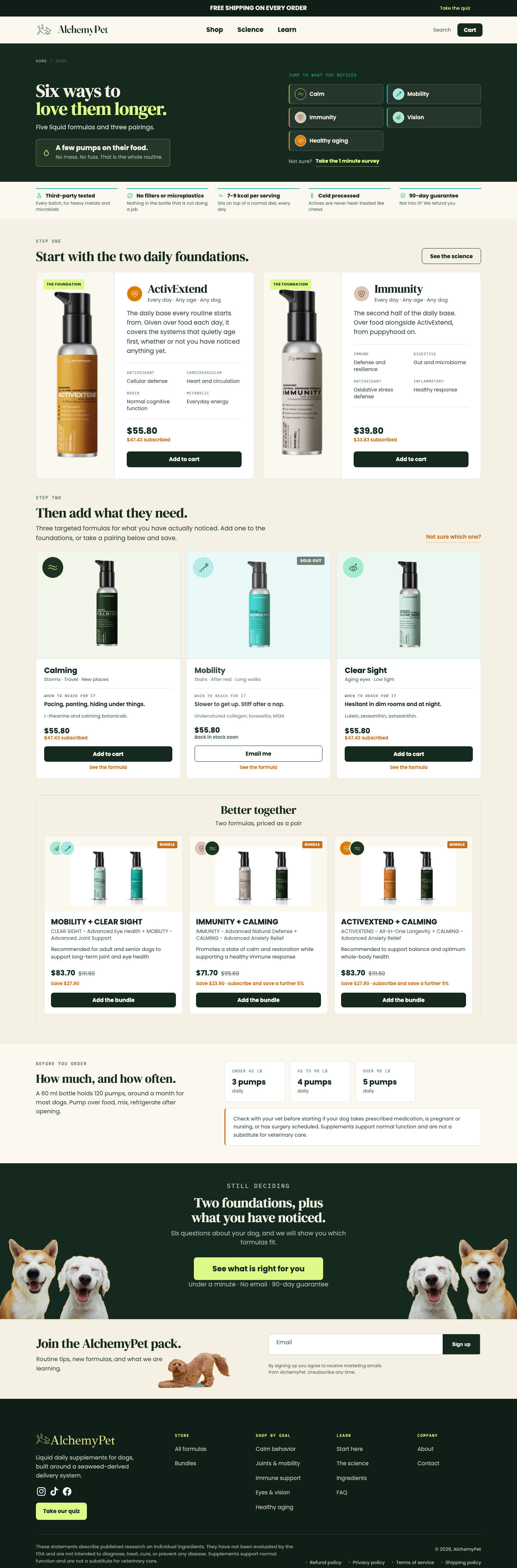
Give a groomer’s recommendation somewhere useful to land
The same components supported the next buying situation: a client following a groomer’s recommendation. Star at Barkin groomers received a named client page with two recommended formulas, their paired bundle, on-page purchase actions, and a route into the routine builder. The recommendation and the relevant products appeared together.
The early referral template had displayed a discount code without the application mechanism; that defect was documented before the pilot went live. Later source and operating records document the coupon handling. By October 25, the captured page advertised an extra 10% off the first order, including a one-time purchase or the first subscription delivery, and disclosed that Star earns commission. The 10% was the customer offer, not a measured commission rate.
This delivered a more complete referral experience for one groomer. Repeatable onboarding, partner-attributed sales, and commission economics still need evidence. The pilot’s commercial contribution remains to be measured.
Scroll each capture to inspect the full page, or open the complete image using the link below it.
After - October 25, 2026
/pages/groomingwithstar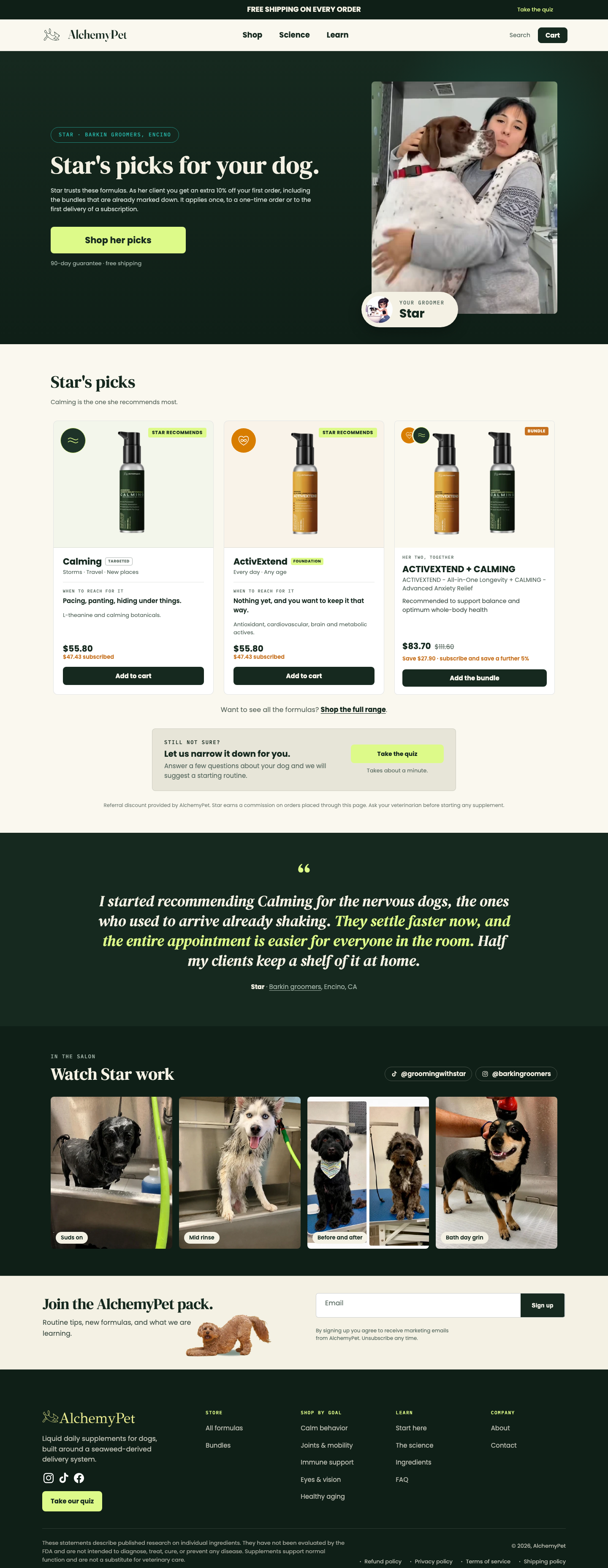
Connect the product facts behind the experience
Product facts also needed a consistent home behind the pages. The internal knowledge bundle links formulas, ingredients, and actives to claims and supporting evidence. A checker validates those relationships, and a generator produces Ingredients-page content. The team has a structure for maintaining information used across the store.
Shared theme components separately made more merchant and product context explicit to machine readers. Between the before audit and October, the homepage’s structured-data types increased from three to eight, and the collection’s from one to 13. These are structural changes; search rankings and AI recommendations were not measured as outcomes.
The knowledge bundle remains internal. Of its 37 claim concepts, 35 are drafts. Claim review and a public endpoint serving an approved bundle remain unfinished.
Online net sales nearly doubled after release
Across June 20–September 2 and September 5–November 18, two equal 75-day windows, Online Store net sales increased approximately 99%. Orders recorded as paid increased approximately 67%. The comparison excludes the two launch/Admin dates and November 19’s partial day.
The product collection also appeared as the recorded landing page for paid orders referred by Google Search after release. These records connect search-led collection entry with purchases; they do not establish that category changes caused them.
The comparison comes from a small order base, so individual purchases materially affect the percentages. The headline covers the Online Store channel only. Other sales channels are outside this comparison, and net sales account for recorded discounts and reversals.
GA4 engagement time declined over the same dates. Its cause and commercial meaning are unknown, so an engagement-time improvement is not claimed.
The sales change is an observation after release. Promotions, inventory, audience mix, and staged changes were not controlled. Shopify also changed session measurement on September 21–23, so cross-launch session and conversion comparisons cannot isolate the rebuild’s effect.
Extend the work and measure the next stage
The next phase needs to resolve mobile performance, complete claim review, and make groomer onboarding repeatable. October mobile homepage lab readings remained around 17–20 seconds to the largest element under documented machine-load conditions; they are not field measurements. Before expanding the groomer pilot, verify the partner discount rules and resolve any remaining stacking concern recorded in October.
Measurement now needs to explain the result: reconcile transactions, compare device and traffic mix under stable session definitions, and connect referrals to paid orders and commissions.
Explore the design changes.
Matched homepage and Products views, plus the headers, footers, cards and mobile layouts that connect the store.